Conference Room
Crestron Automate VX2, Televic & Dante
Audio/Video System Integration project for a professional conference room, based on Crestron Automate VX2 Pro with 9 PTZ cameras, a Televic discussion system, Dante audio networking and centralised control through a Crestron CP4 and TS-1070 touch panel.
The architecture coordinates microphone status, speaker tracking, camera tracking, presets, video switching, Audio/Video distribution and room control, while keeping Dante audio transport, Televic control events and the automation logic managed by Automate VX2 and CP4 clearly separated.
System Overview
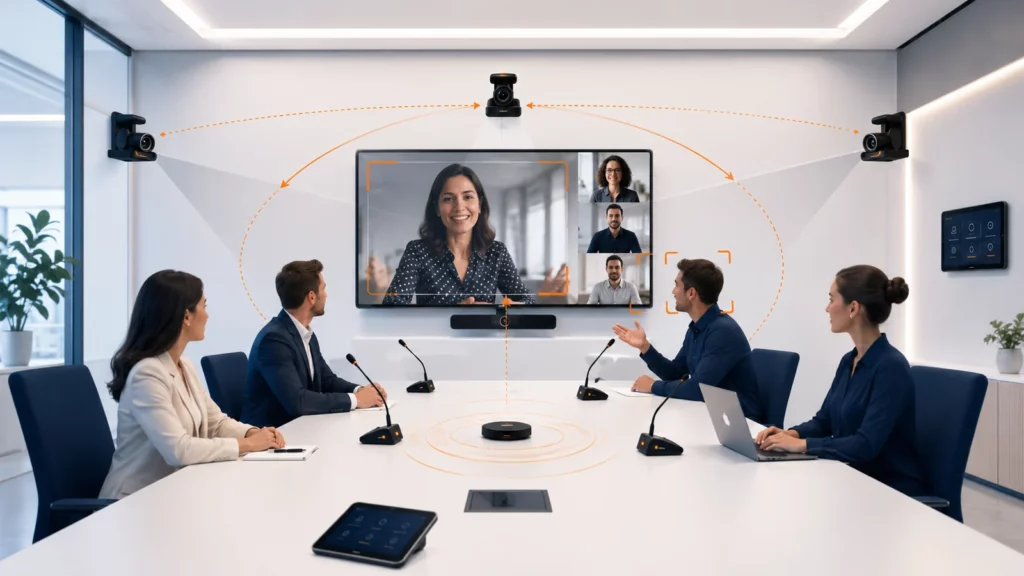
The room was designed as an integrated conferencing and collaboration system in which audio, video, tracking, signal distribution and control operate as coordinated parts of the same architecture.
The objective is to automate camera management and simplify room operation, while keeping control functions, Dante audio transport and tracking logic clearly separated.
Speaker Tracking & Camera Tracking
Events from the Televic discussion system are used to identify the active speaker and coordinate the behaviour of the PTZ cameras through Automate VX2.
Multi-Camera Direction
Automate VX2 manages 9 Crestron IV-CAM-P20-B cameras, coordinating presets, framing, priorities, transitions and video switching according to the room’s operating conditions.
Dante Audio Network
The Dante network carries audio streams between the discussion system, DSP and Audio/Video devices, keeping audio transport separate from the events and logic used for tracking.
Centralised Control
Crestron CP4 and the TS-1070 touch panel provide centralised room control, including scenarios, source selection, Audio/Video functions and dedicated technical pages for supervision and diagnostics
System Architecture
The architecture separates the discussion and audio acquisition layer, Dante audio transport, tracking and video automation logic, general room control and the operator interface. Each subsystem therefore retains a specific role within the overall solution.
Events and status information from the Televic system are used by the control layer to determine microphone-related operating conditions, while the Dante network carries audio signals to the processing devices. Crestron Automate VX2 manages the PTZ cameras, presets, camera tracking and multi-camera video direction; the CP4 coordinates the room control functions, while the TS-1070 provides the operational and technical user interface.
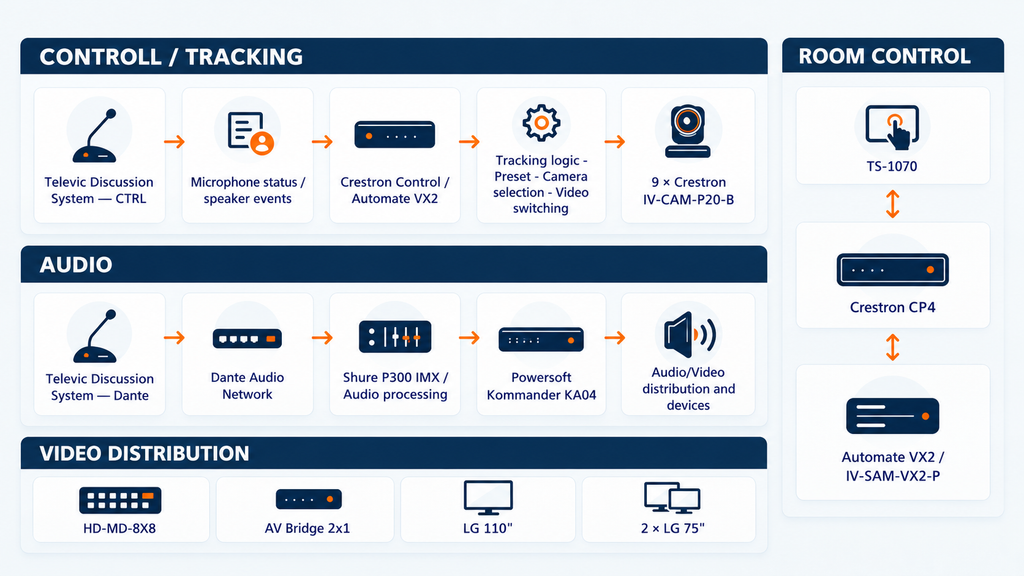
The separation between Televic control events, Dante audio transport, Automate VX2 video automation and CP4 room control prevents different functions from overlapping and makes the architecture clearer, easier to verify and easier to diagnose during commissioning and troubleshooting.
Automate VX2 and Camera Tracking
Crestron Automate VX2 manages the automated video system within the room, coordinating the 9 PTZ cameras, presets, priorities, transitions and video switching according to events and operating conditions received from the discussion system.
The tracking logic is kept separate from Dante audio transport and general room control, making system behaviour easier to understand, configure, commission and troubleshoot.
9 PTZ Cameras
The system uses 9 Crestron IV-CAM-P20-B cameras, configured to cover the different areas of the room and provide consistent framing according to the position and role of the active speaker.
Speaker Tracking
Events related to the status of the Televic microphones are used to identify the active speaker and trigger the corresponding tracking logic.
Presets and Framing
The cameras use predefined presets and framing positions to represent speakers, seats and functional areas of the room in a repeatable and verifiable way.
Multi-Camera Automation
Automate VX2 coordinates camera selection, preset recall and transitions between different shots within a centralised multi-camera automation logic.
Video Switching
Video source selection is coordinated with camera behaviour and the room’s operating conditions, maintaining a consistent video flow to the display and videoconferencing systems.
Predictable and Diagnosable Logic
Tracking, presets, priorities and transitions are organised so that the actual behaviour of the room can be verified, simplifying testing, commissioning, diagnostics and troubleshooting.
Separation Between Control and Audio Network
Within the project, the Televic system performs two distinct functions that are kept separate within the architecture: control events and status information used by the control layer, and audio signal transport over the Dante network.
This separation avoids confusing the audio path with the tracking logic and allows control events, Dante streams and video automation behaviour to be verified independently.
Televic CTRL
The CTRL layer provides events and information related to microphone status and the discussion system. This data is used by the control layer to determine the operating conditions required for speaker tracking and camera tracking logic.
Televic Dante
The Dante network is used to transport audio streams between the discussion system and the Audio/Video processing devices. The audio path remains independent from the logic used to identify the active speaker and control the cameras.
CTRL handles operational events; Dante transports audio. The two functions remain separate.
CP4, TS-1070 and Room Control
General room control is handled by the Crestron CP4, which coordinates operational functions and the integration between the user interface, the Automate VX2 system and the Audio/Video devices. The TS-1070 touch panel provides access to both operator functions and dedicated technical pages for verification and diagnostics.
The interface is organised to keep day-to-day room operation simple, while separating operational functions from the information and controls intended for commissioning, maintenance and troubleshooting.
Crestron CP4
The CP4 manages the coordination of room control functions, integration with external devices and the exchange of commands and feedback with Automate VX2 and the other components of the system architecture.
TS-1070 Touch Panel
The TS-1070 provides the operator interface for room control, giving access to the functions required for daily operation without unnecessarily exposing the technical complexity of the system.
Technical Pages and Diagnostics
Technical functions are kept separate from operational scenarios, allowing states, feedback and subsystem behaviour to be verified during commissioning, maintenance and troubleshooting.
Simple room operation for the user, technical visibility for commissioning and diagnostics.
Technologies and Devices
Control and User Interface
Video, Tracking and Collaboration
Audio and Conferencing
Displays
Project Result
The result is an integrated conference room in which the discussion system, Dante audio network, automated video production, PTZ cameras, Audio/Video distribution, centralised control and operator interface work as coordinated parts of the same architecture.
The separation between Televic control events, Dante audio transport, Automate VX2 logic and CP4 room control makes the system easier to operate, verify and diagnose, while maintaining a simple user experience for day-to-day room operation.
Do you have a conference room, meeting room or collaboration environment project?
I can support you with functional design, programming, integration, commissioning and troubleshooting of Audio/Video, conferencing and control systems, either for a specific phase of the project or by working alongside your team during technical development.